Hannah Darabi. Why Don’t You Dance?
In her first solo exhibition in Belgium, Iranian artist Hannah Darabi (lives and works in Paris) presents the project Why Don’t You Dance? * Over the past twenty years, her native country and home city have been central both to her thinking and to a body of work that weaves together image, history and collective memory.
As choreographer Pina Bausch once said, ‘Some things can be said with words, others with movement. But there are also moments when words fail us [...] That is when dance begins.’
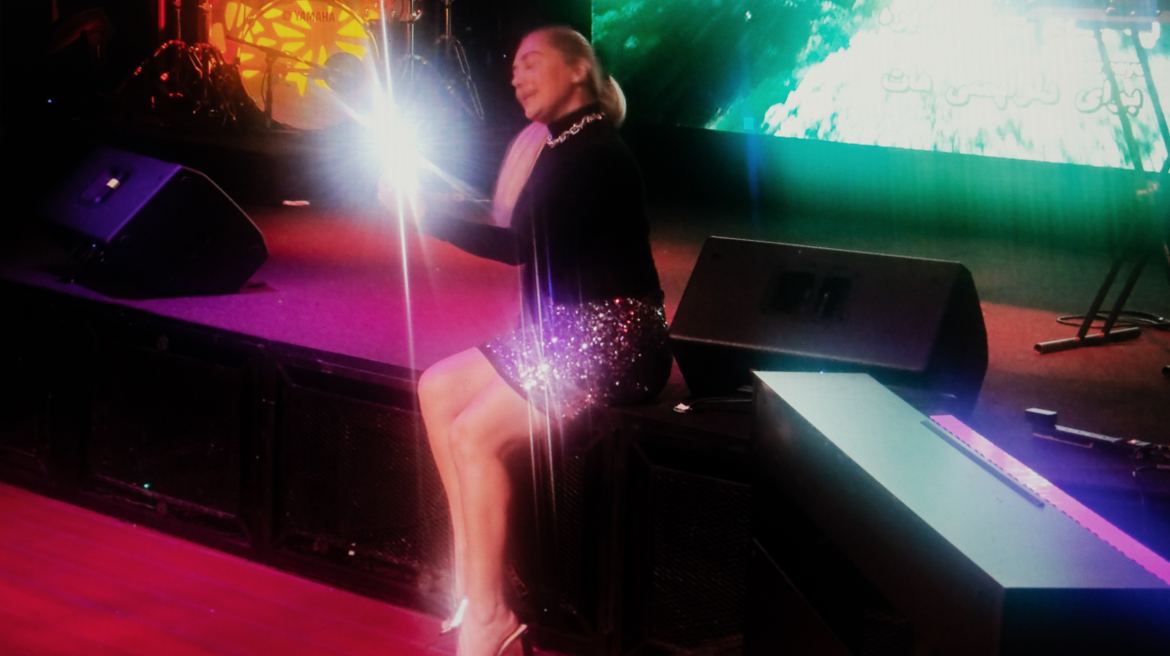
Why Don’t You Dance? explores how dance has long served as a form of resistance in Iranian society. Hannah Darabi recalls the parties she attended with her family as a child during the Iran–Iraq War. Unlike her peers, however, she did not dance, and the question kept returning… Why Don’t You Dance?
Rooted in autobiography, the title also serves as a reminder that, even as the Islamic Republic embodies death, life resists and finds expression in dance.
Three singular figures lie at the heart of the project: Mahvash, one of Iran’s first cabaret singers and dancers in the 1950s and the author of a fictionalised autobiography, Les Secrets de l’accomplissement sexuel (The Secrets of Sexual Fulfilment); Jamileh, a cabaret dancer in the 1970s who rose to prominence through her distinctive interpretation of the Jaheli, a dance traditionally reserved for men as an expression of masculinity; and finally, and finally Mohammad Khordadian, a dancer and choreographer living in exile in Los Angeles since the 1979 Revolution, who helped renew traditional Iranian dance by introducing Western influences into its vocabulary. In developing the project, Hannah Darabi draws on both her intimate knowledge of the country and the ‘Woman, Life, Freedom’ protest movement, which began in Iran in 2022 and subsequently spread around the world after Mahsa Amini, a young Kurdish woman, died following her arrest by Iran’s morality police.
The exhibition brings together several bodies of work. These include Tehran–Los Angeles, Return Journey, which places Hannah Darabi’s photographs of Los Angeles in dialogue with postcards of Tehran; Mahvash, Book of Pleasure, a series of collages bringing together pages from the dancer’s autobiography, images drawn from magazines of the 1960s and 1970s, as well as archival material and the artist’s own photographs; Follow the Beat, a series of videos in which Darabi invites dancers to reinterpret Iranian dances; and, finally, Cabaret Tehran, House of Legends, a tribute to the Iranian cabaret in Los Angeles that became a gathering place for leading figures of the city’s Iranian diaspora.
Why Don’t You Dance? reveals the power of dance as a means of expression, survival and protest. The project also explores gender and sexual norms, which bodies are deemed acceptable, and, finally, exile. Politically engaged and defiant, the exhibition feels especially urgent today, as ‘a crime without precedent unfolds in the streets of Tehran’ and events in Iran continue to command international attention.
* Hannah Darabi won the Prix Elysée 2025. The award gave her the means to develop the project Why Don’t You Dance? to its full potential.