Interview with Lucia Bru
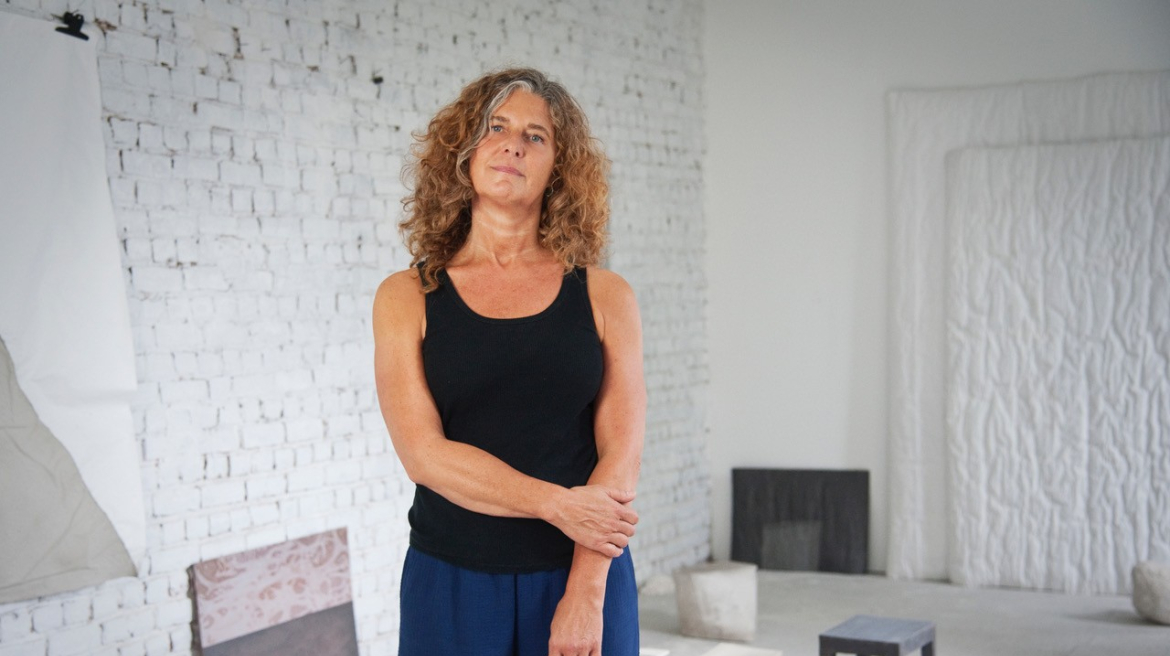
Photo: Tom Vanhee
How did you conceive the exhibition Aux choses mêmes? What inspired you?
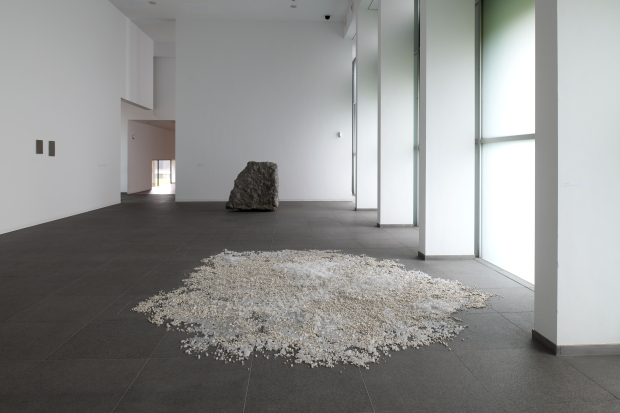
The museum space, with its two large and two small rooms, immediately prompted me to reflect on scale, a notion central to my research.
It quickly occurred to me that, in the first room, the viewer would move towards the things, whereas in the second, the things would come towards them.
I often use the word ‘thing’ because it goes to the heart of the matter. It returns me to questions of immediacy and perception, and to a form of simplicity.
Today, it seems important to me to return to simple forms of contact: concrete, physical and perceptual, without necessarily resorting to discourse.
Aux choses mêmes is a way of saying: ‘let us return to the simplicity and pleasure of looking at a sculpture’.
How do you approach an idea, a sculpture?
For a very long time, my work has been structured around families of objects – communities of forms, as I like to call them. Over time, forms of coexistence and relationships have emerged, one thing giving rise to another.
I like to enter into dialogue with materials. I organise things in such a way that I do not have complete control, allowing the materials a degree of freedom. The kiln, for example, reveals things that had remained silent within the form, bringing to light the impulses, caresses and gestures impressed into it.
My formal vocabulary, which is fairly abstract, is made up of simple geometric forms into which I try to breathe life, a sense of vitality. Materials come into contact with one another: crystal, cement, porcelain, newspaper… I like to see how porcelain will react to cement, how crystal – which we associate with a certain fragility and richness – can contain the far denser material of cement.
Light is also an important element. It reveals the objects. It gives them a temporality and it constructs the space. In the studio, it gives rise to forms that arrest my attention, which I document through photography or video.
How would you describe your practice and the relationship you have with the works you make? Could you, for example, tell us about the shelves in the first room of the museum?
My gestures are intuitive. Even when I repeat them, I never produce exactly the same thing. The forms shift with the material itself – clay that is more or less dry – but also with my moods, and with the environment. These imperfections introduce a human quality, at times even a form of anthropomorphism.
The sculptures become companions.
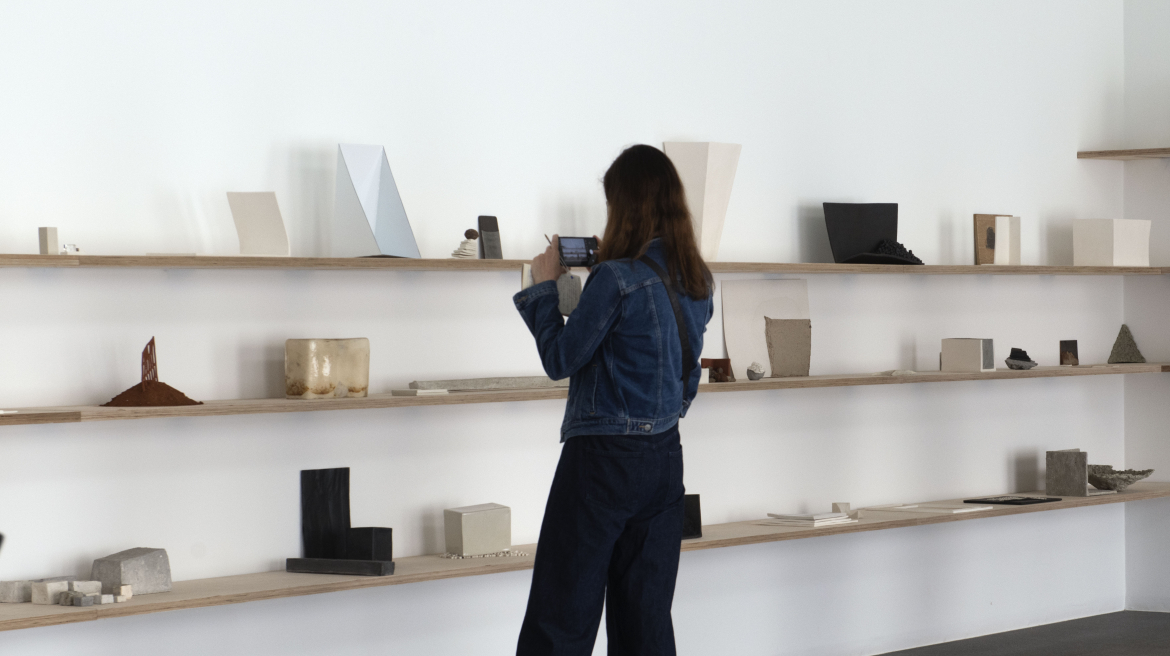
I have had around ten studios in Brussels. Each new space is a new beginning. Each time, before beginning anything else, I installed shelves on which to place my sculptures. Denis Gielen speaks of a ‘library of forms’.
It was a way of putting down my bags and finding my bearings again. The shelf allows me to see where I am; I can return to a piece or put it on standby.
The exhibition Aux choses mêmes begins with shelves holding small-scale sculptures to which I wanted to give importance, since so much attention is often given to what is large.
These shelves also make it possible to follow the architecture of the building. The visitor moves through the space from one sequence to the next. One might imagine a kind of temporal or formal tracking shot. It is a way of presenting these thirty years of research.